


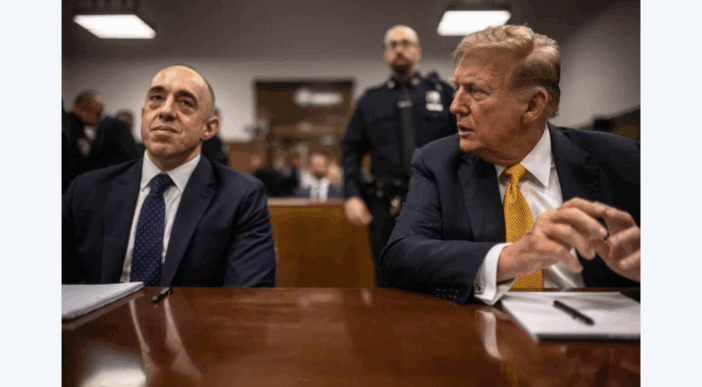
WASHINGTON, July 29, 2025 – The Department of Justice says it “lost” a key whistleblower complaint documenting Emil Bove’s contempt for the rule of law and found it again just yesterday – a period of more than two months in which Bove was nominated to serve as a federal appeals judge and cleared the Senate judiciary committee pending a final vote.
The DOJ’s Office of Inspector General, responsible for conducting internal investigations, received an online copy of the complaint from Whistleblower Aid on May 2 and signed in a couriered copy three days later. The disclosure provided documentary evidence that Bove and other senior DOJ officials instructed department lawyers to violate a court order relating to the Trump administration’s immigration deportation policies.
They also directed DOJ lawyers to commit perjury in federal court to cover up the violation, the evidence shows.
Yet the office now says the documents were lost and refound only after Whistleblower Aid presented proof of submission and receipt. Evidence relevant to the Senate’s final vote on the Bove nomination has thus sat unacknowledged for almost three months, foreclosing the possibility of any meaningful investigation into a lifetime judicial appointment.
“We are finding this out now, on the day of Mr. Bove’s confirmation vote,” said Whistleblower Aid Chief Legal Counsel Andrew Bakaj. “And that begs the question: What does it take for the Inspector General to do its job and investigate claims as pertinent – and timely – as the one we submitted?”
Our client, a former attorney in the Office of Immigration Litigation at the DOJ, blew the whistle on the DOJ leadership after Judge James Boasberg ordered the administration to stop sending deportees to a notorious El Salvadoran prison.
Our client is one of three whistleblowers who have accused the administration of unethical and illegal actions to undermine Judge Boasberg’s authority. The client went to the IG’s office in part because of their professional obligation to ensure that no attorney-client information goes outside the Department of Justice.
“We filed our client’s evidence with the DOJ OIG because unlike our client, they have the ability to investigate,” Bakaj said. “The fact that our client’s evidence has gone unacknowledged – let alone investigated – from May to the eve of Mr. Bove’s confirmation vote stands in stark contrast with the unusual speed with which this confirmation is being pushed through. It is difficult not to see this as anything other than a duck and cover maneuver to prevent other potential whistleblowers from coming forward and speaking the truth.
Bakaj himself used to work in an inspector general’s office, at the Department of Defense, and said he knew from personal experience that mislaying a complaint is very far from normal procedure.
“The expectation is that every whistleblower complaint is investigated with speed and due diligence,” he said. “Evidence doesn’t just go missing. Those responsible need to be held to the highest standards of accountability. The evidence shows Bove revealing contempt for the office he is being nominated to – and that evidence was effectively buried.”